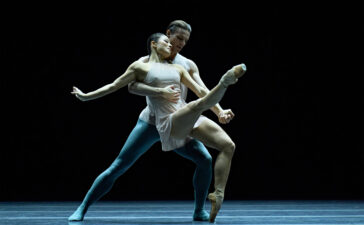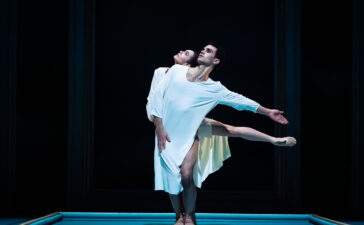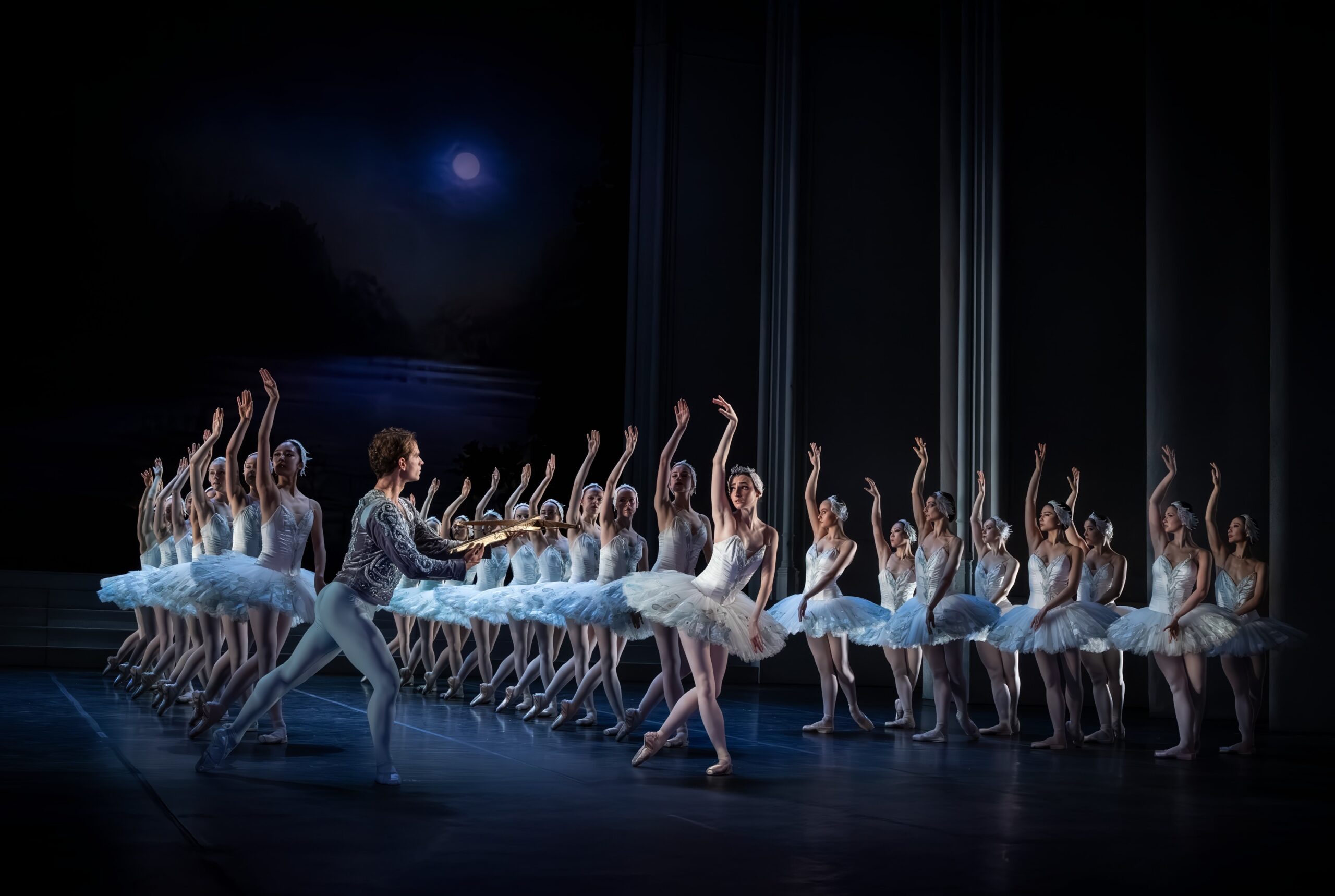
Despite the conceptual rigidity and emotional chill of the staging, the Royal Swedish Ballet infuses the work with pulse and human clarity, led by Maya Schonbrun, Dmitry Zagrebin and Gianmarco Romano
By Alessandro BIZZOTTO
I have encountered Rudolf Nureyev’s Swan Lake on several occasions over the years, at both the Paris Opera and La Scala in Milan. It remains, however, a work with which I have never fully made my peace. Its ambitions are firmly rooted in psychology: this is a ballet that deliberately exchanges fairytale lyricism for a sombre inquiry into repression, sublimated desire and inner fracture. The conceptual framework is undeniably rigorous, yet it also risks constraining the very ambiguity and sense of wonder that have allowed Swan Lake to endure.
The visual severity of Nureyev’s production reinforces its atmosphere of emotional chill. The set is austere and rigid, enclosing the action within a space that feels controlled, almost antiseptic. Within this framework, the distinction between lived reality and interior fantasy is persistently unstable: it is never entirely clear where the external world ends and where Prince Siegfried’s inner life begins, nor whether the ballet unfolds partly or wholly within his imagination.
Siegfried inhabits this world as a figure defined less by action than by suspension. Positioned on a throne that suggests status without comfort, he appears enclosed by his surroundings rather than supported by them, as if the architecture itself were shaping his inner life. The looming frame that dominates the stage imposes a sense of enclosure, suggesting a psyche structured by rituals and expectations. So, within this constrained landscape, Odette takes shape not as a flesh-and-blood presence but as an idea, luminous precisely because she remains unreachable.
This logic carries through to Nureyev’s treatment of the prince’s romantic impulse, framed as an act of sublimation rather than fulfilment. As I have written before, Siegfried recoils from the role imposed upon him by adulthood and authority, redirecting his desire towards a swan-woman he can never truly possess. What emerges is the image of a man unable or unwilling to recognise the source of his longing: whether rooted in personal shame or in the oppressive distance between his inner life and the expectations of his mother and society, this uncertainty remains unresolved, giving the character an uneasy depth.
And yet, at the Royal Swedish Opera, something shifts. The company has been performing this version of Swan Lake only for a relatively short time, following a decision by its former director, Nicolas Le Riche, who himself danced the ballet several times as a principal with the Paris Opera Ballet. In Stockholm, the choreography, dramaturgy and design of course remain unchanged, but the Royal Swedish Ballet infuses the work with a fresh energy, somehow giving it new life. What had previously felt opaque, even emotionally withheld, suddenly becomes more animated and, crucially, more human. The transformation does not come from reinterpretation, but from inhabitation.
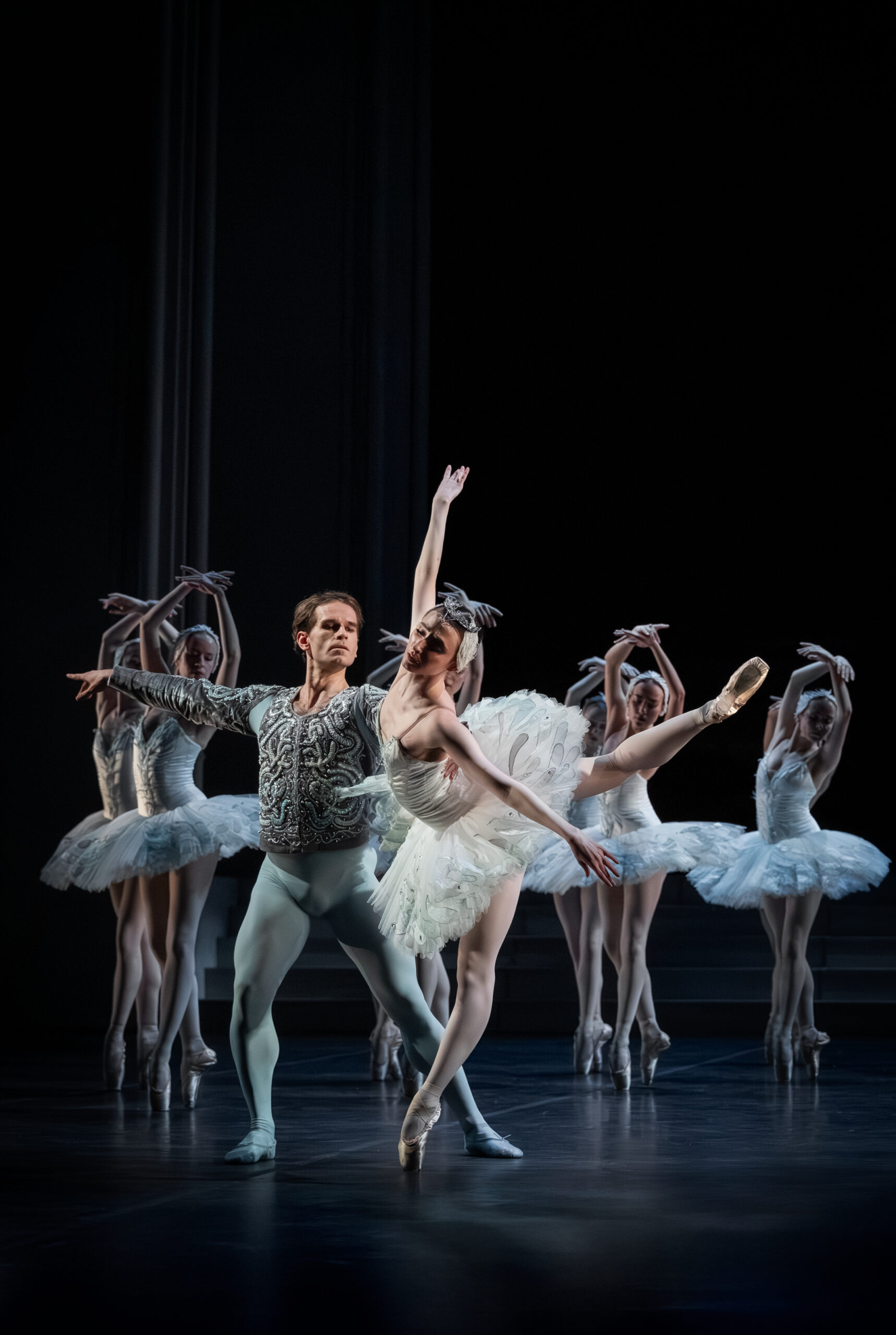
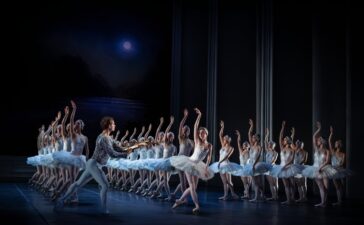
Part of this renewed clarity lies in the space itself. Seen from a central vantage point in the spectacular auditorium of the Royal Swedish Opera, with its gently sloping stalls, the geometries of Swan Lake are allowed to fully breathe. Nureyev’s smoke and rigid architectural motifs, designed by Italian scenographer Ezio Frigerio, flatten the action less than they can elsewhere.
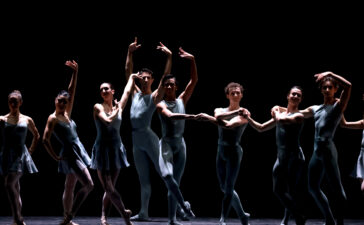
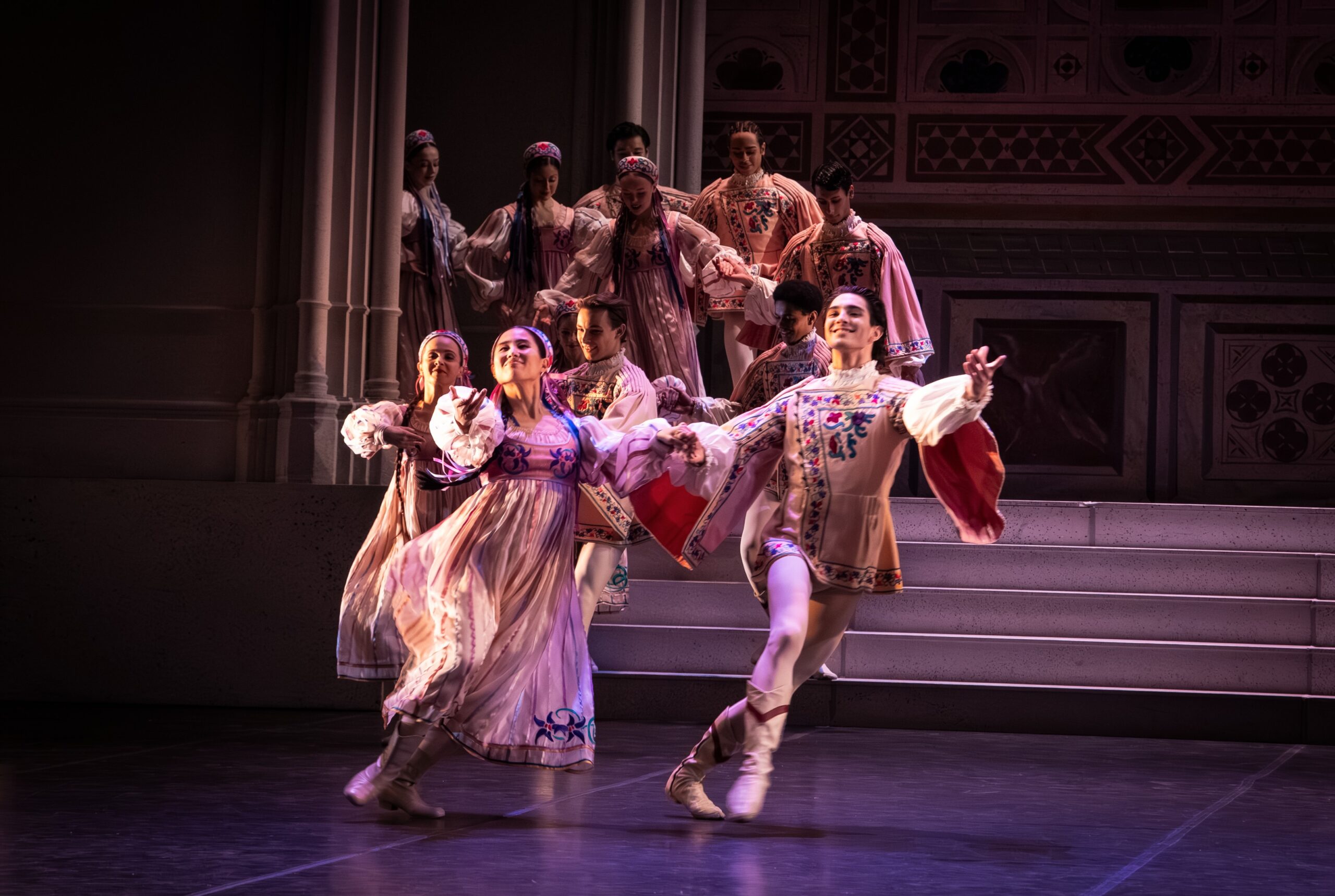
The company’s corps de ballet moves with coherence and without rigidity. Even the demanding pas de trois emerges as a moment of collective vitality: crisply coordinated, energetically driven, and marked by a precision that never feels academic. Hiroaki Ishida jumps and lands with sharp accuracy in the male solo, while Emily Slawski executes her variation with bright, focused vitality, negotiating technical challenges with apparent ease.
Young principal dancer Maya Schonbrun, who joined the Royal Swedish Ballet in 2022 after winning the Prix de Lausanne, proves to be one of the evening’s genuine revelations as Odette/Odile. Any initial reservations one might have regarding her youth are swiftly dispelled. Her physique, slender and flexible without veering into brittleness, supports a technique that is secure, articulate, and at the same time surprisingly expressive – she can turn her physical gifts into a powerful narrative tool.
In Act Two, her Odette is not a frozen snow queen, as is sometimes the case with more experienced ballerinas. Instead, there is a sense of injury and vulnerability in her, a creature defined as much by pain as by beauty while her arms quiver and soften. Within Nureyev’s framework, Schonbrun restores a sense of corporeal presence: she breathes, trembles and pulses with life. The White Swan pas de deux becomes a moment of shared aspiration rather than decorative lyricism: two beings reaching together toward an impossible promise of love, inhaling the same fragile hope.
With her, principal Dmitry Zagrebin aligns quite naturally with Nureyev’s psychological conception of Siegfried while avoiding its more inert tendencies. Zagrebin is not a monumental or overtly heroic prince; he is compact and technically secure. His jumps are forceful yet grounded, and his musical intelligence gives the choreography a sense of inevitability rather than display, particularly in the way he shapes pauses.
When partnering Schonbrun in the White Swan pas de deux, he succeeds in supporting her without disappearing or becoming merely something she can hold on to while she displays her lyricism. He breathes with her, and together they honestly portray a love duet between two people who sense they belong to different worlds, yet momentarily forget the need to find a way out.
Zagrebin conveys a young man actively struggling with himself. The introspective solo of Act One, a pivotal moment for the prince in this production, gains real momentum. In a ballet where Siegfried’s inner life is meant to drive the narrative, Zagrebin dances this slow variation as an active search for release from inner pain, shaped through buoyant jumps and clearly articulated legwork, rather than as a passive contemplation of his own unease. A decision that stands out as the most convincing achievement of his interpretation.
Schonbrun’s transformation in Act Three is equally surprising. Her Odile avoids the trap of excessive causticity, which would undermine the logic of Siegfried’s deception. Instead, she seduces with precision: civetteria and charm conceal danger, but never entirely, as the audience can still sense that something is amiss. This Odile demonstrates that true seduction lies not in hostility but in ambiguity, appearing familiar yet subtly altered. Schonbrun’s movement quality reinforces this psychological subtlety: the alternation between slow, controlled phrasing and sudden, sharper attacks creates a physical dramaturgy that feels deliberate and narratively motivated. While this approach might not conform to Parisian expectations (one wonders if she would be allowed it while dancing at the Paris Opera), it is profoundly theatrical. In the coda, her ambition is evident: multiple double and triple fouettés testify to stamina and confidence, though one triple turn could have benefited from greater polish. It is the exuberance of a young artist pushing boundaries, a quality that maturity will inevitably refine.
Zagrebin meets her energy with feverish dynamism, responding with intensity rather than submissive adoration. Brilliantly executing his turns in the variation and the coda of the Black Swan pas de deux, he launches into the pirouettes seemingly ahead of the music, yet extends them through extra rotations, landing perfectly on the final beat. At the outset, his Siegfried appears intoxicated by Odile’s new aura, intrigued and not wary.
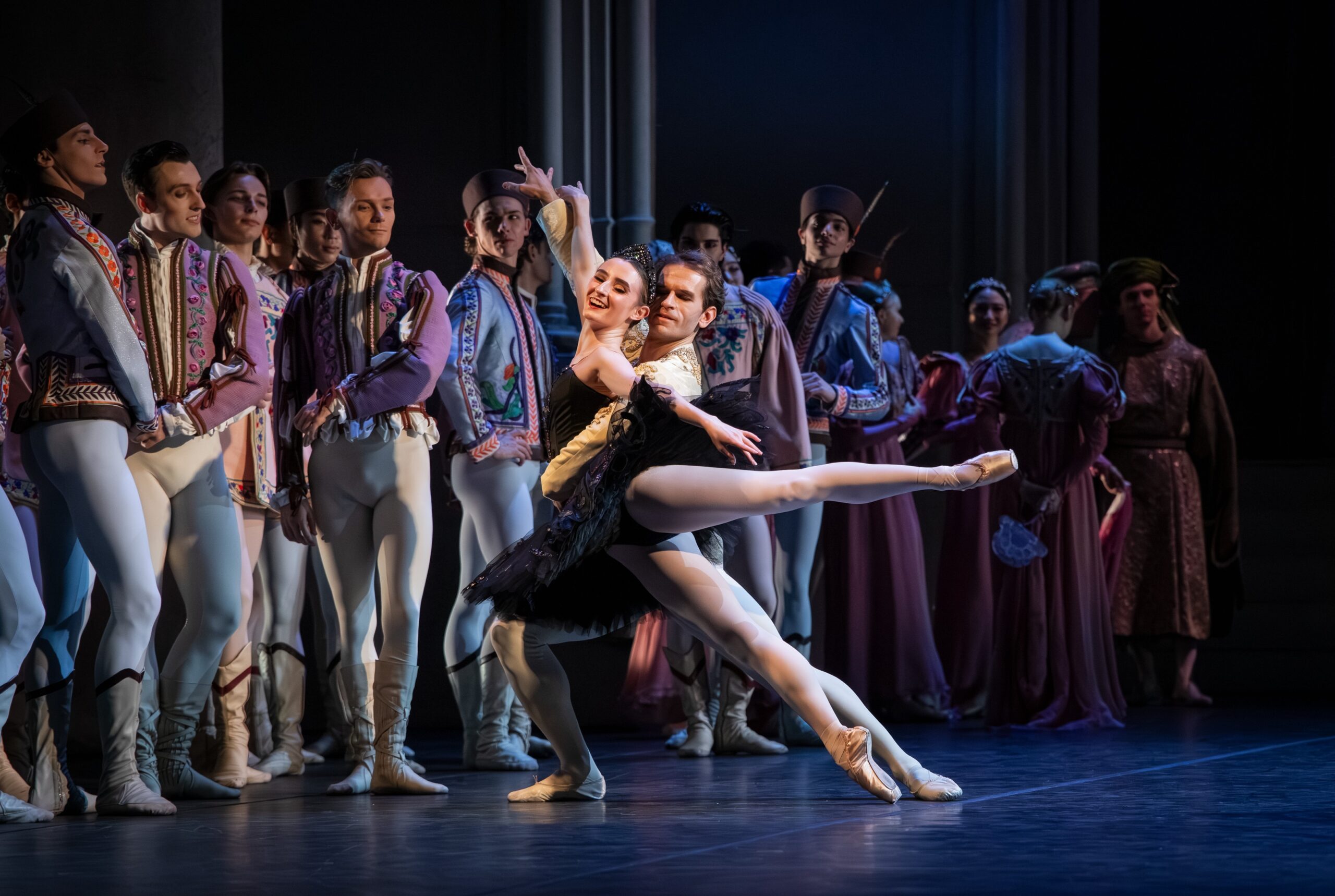
Soloist Gianmarco Romano completes the central triad as Rothbart with authority and restraint. Eschewing empty bravura, he presents a figure of controlled menace. His Rothbart, also the prince’s tutor in this Swan Lake, embodies the repressive force at the heart of Nureyev’s conception: the externalisation of an internal censor. Romano’s physical carriage is predatory yet disarmingly calm. He does not dominate the stage through volume – his Act Three variation is not perfectly delivered – but through presence, convincingly portraying a character who takes a twisted pleasure in manipulation.
The final act of this production remains structurally problematic. Shortened yet emotionally diluted, it struggles to sustain tension, and the corps de ballet cannot entirely overcome the choreographic constraints of the revised swan dances. The closing tableau still raises more questions than it resolves.
Even here, the Royal Swedish Ballet manages to imbue the material with meaning, and Zagrebin and Schonbrun preserve emotional continuity. The fourth act is still a weak link, but their presence provides coherence and human interest, reminding us that in this production the ballet’s power often resides with the dancers as well.
So, the Swedish company does not redeem Nureyev’s Swan Lake by softening its conceptual rigidity. The production continues, in many respects, to be austere and forbidding. The darkness persists, but it is rendered compelling through the company’s expressive presence and subtle storytelling: a testament to their artistry and the rare skill required to make even a flawed production seem theatrically necessary in certain respects.