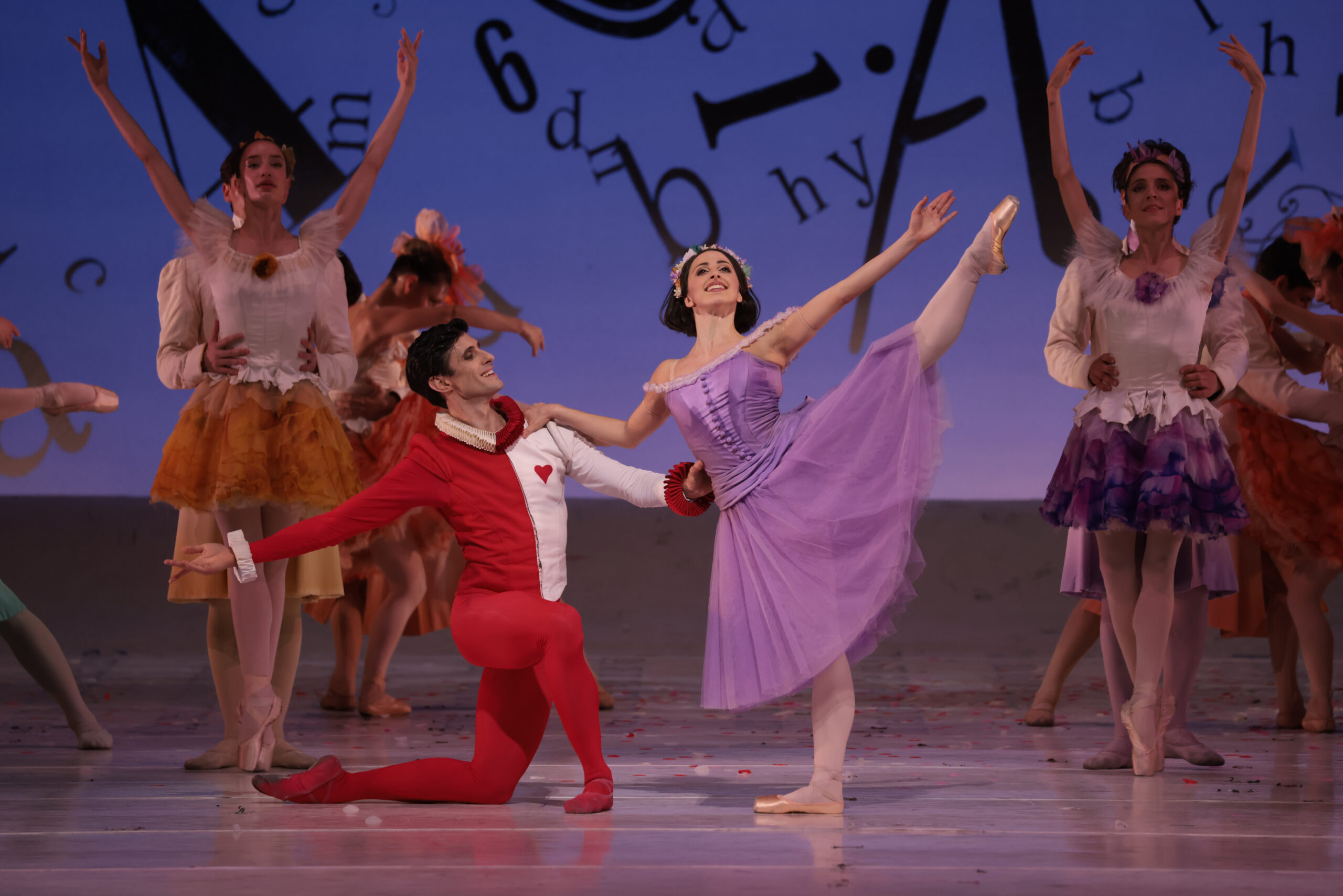
Christopher Wheeldon’s now-canonical masterpiece arrives at La Scala in the original Royal Ballet production, confirming both its structural sophistication and its enduring theatrical appeal. Yet the evening reveals a mixed interpretative landscape, where clarity of conception coexists with moments of reduced theatrical incisiveness.
Fifteen years after its creation for The Royal Ballet and the National Ballet of Canada, Christopher Wheeldon’s Alice’s Adventures in Wonderland, set to the kaleidoscopic score by Joby Talbot, arrives at Teatro alla Scala in Milan not as a novelty, but as a firmly canonised work of twenty-first-century narrative ballet. What once registered as a bold structural gamble – an evening-length ballet built from episodic fragments, cinematic illusion and hybrid theatrical languages – now reads as an established aesthetic system, almost a self-contained grammar of contemporary spectacle.
In its early years, the central question surrounding Alice was whether Carroll’s episodic universe could sustain choreographic continuity, or whether its succession of tableaux would dissolve dramatic tension into decorative sequence. That anxiety has largely faded. What remains is a work that embraces discontinuity as principle rather than flaw: a dramaturgy of perpetual metamorphosis, in which coherence emerges through transformation rather than linear progression.
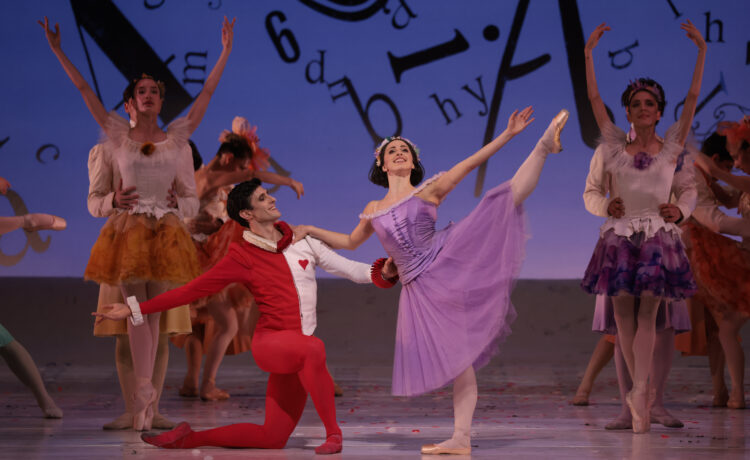
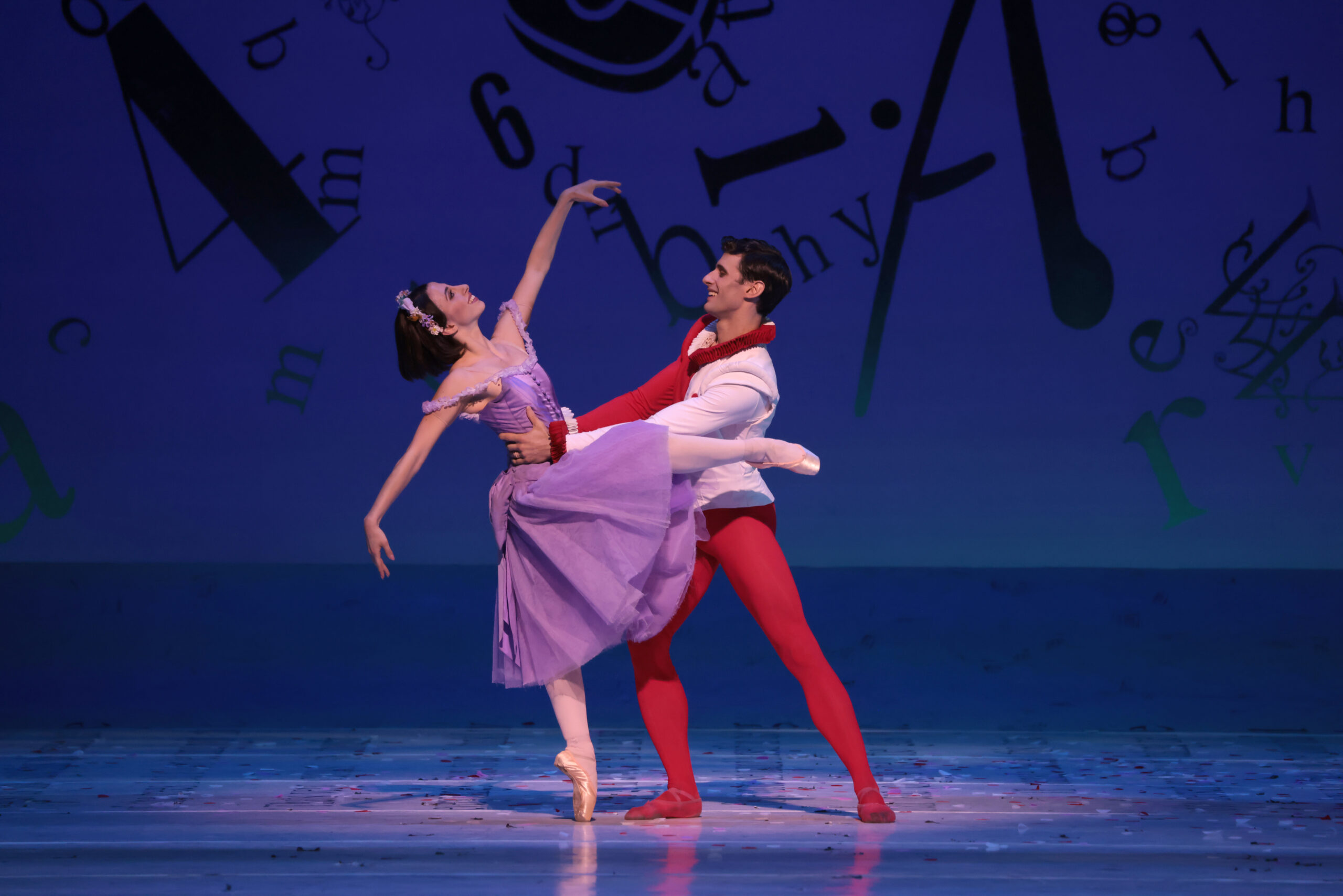
Equally decisive is Wheeldon’s framing of the narrative through prologue and epilogue, recasting the ballet as a dream within a dream and quietly distancing it from childhood innocence. This is not Carroll’s seven-year-old Alice, but an adolescent consciousness – curious, alert, slightly estranged – confronting the opaque logic of an adult world she can observe but not yet decode. In soft lavender and a brown bob, she inhabits a deliberately contemporary, non-mythologised register. Even the romantic subplot – her attachment to Jack, the Knave of Hearts – functions less as sentimental ornament than as narrative motor and tonal counterweight within Wheeldon’s broader mosaic.
Where the ballet continues to divide opinion is in its episodic architecture. Its succession of vividly imagined scenes can still resist cumulative dramatic pressure, dispersing emotional climax across shifting theatrical surfaces. Yet in performance the effect feels increasingly less like fragmentation than controlled proliferation: a staged world in which meaning emerges through continual reconfiguration.
That same destabilisation extends to Wheeldon’s treatment of theatrical space and language. One of the ballet’s most memorable devices remains the moment in which an enlarged Alice peers through an impossibly tiny door towards the auditorium, only for dancers to burst among the spectators in a swirling waltz, confetti cascading over the seating rows: a sly reversal in which Wonderland migrates from stage to house and the proscenium briefly turns back upon its own audience. Elsewhere, quieter gestures echo Carroll’s logic of semantic slippage. When Alice partially unfurls a banner reading “START”, the incomplete image first isolates “ART”, then “TART” – the pastry whose theft fuels the Knave of Hearts’ predicament. Such fleeting visual puns encapsulate the choreographer’s method: meaning is continually displaced, reframed and mischievously reassembled through altered perspective.
Within this framework, La Scala soloist Camilla Cerulli’s Alice offers a sustained and musically intelligent traversal of the role. Her performance is marked by clarity and stamina, shaping a figure of attentive curiosity rather than incandescent authority. Yet the interpretation stops short of propelling the character beyond observation into active dramaturgical agency; she does not quite elevate Alice from a responsive presence into a true driving force of the stage action. The comparison with earlier benchmark portrayals, such as the Royal Ballet’s Sarah Lamb, inevitably highlights a difference of register: where Lamb radiated a more commanding theatrical luminosity, Cerulli opts for restraint, continuity and psychological understatement.
As her romantic counterpart, first soloist Nicola Del Freo’s Jack (the Knave of Hearts, here functioning as a kind of fragmented double within Alice’s emotional imagination) offers a performance that is exemplary in purely classical terms: refined, secure and elegantly phrased, with assured partnering, and an overall delivery without any major technical flaw. But his effectiveness is inevitably circumscribed by the choreography itself, as Christopher Wheeldon’s conception of the role remains deliberately underwritten, more a symbolic construct than a fully fleshed character. As a result, even such a polished and controlled interpretation finds itself with limited dramatic leverage, the role offering little substantive “meat” in terms of expressive or narrative development. Del Freo brings refinement and classical poise to the stage, but the figure ultimately remains an exquisitely danced outline rather than a fully realised, emotionally resonant flesh-and-blood protagonist.
The dual role of Lewis Carroll and the White Rabbit – completing the interpretative “trident” alongside Alice and Jack and shifting between authorial shadow and paternal presence within the dream logic – is performed by soloist Mattia Semperboni with accuracy and clean articulation. Yet the White Rabbit, in particular, demands a more fractured internal energy, a nervous propulsion that exceeds precision and enters expressive instability. Here, however, the interpretation remains largely contained within secure execution. The elastic, neurotic quality often associated with earlier British readings of Christopher Wheeldon’s work is only partially realised, and the character’s defining urgency never fully tips into psychological or physical excess, resulting in a portrayal that is precise but insufficiently volatile.
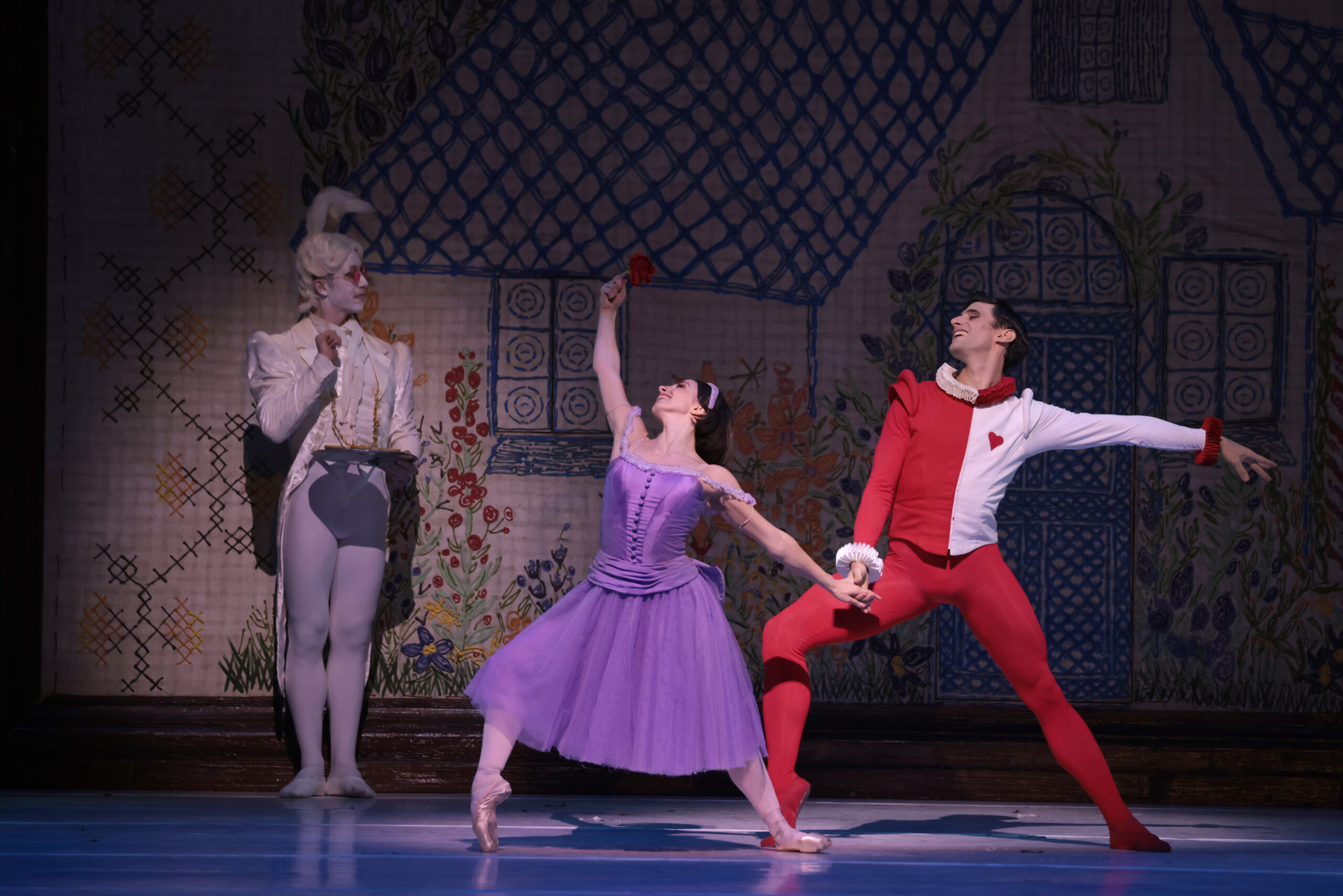
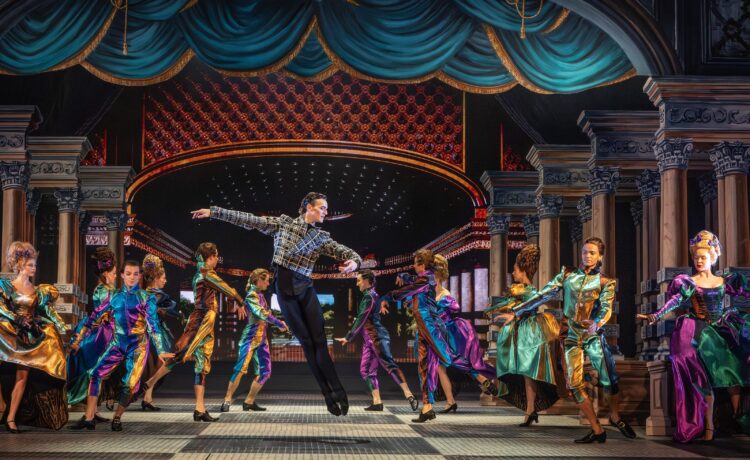
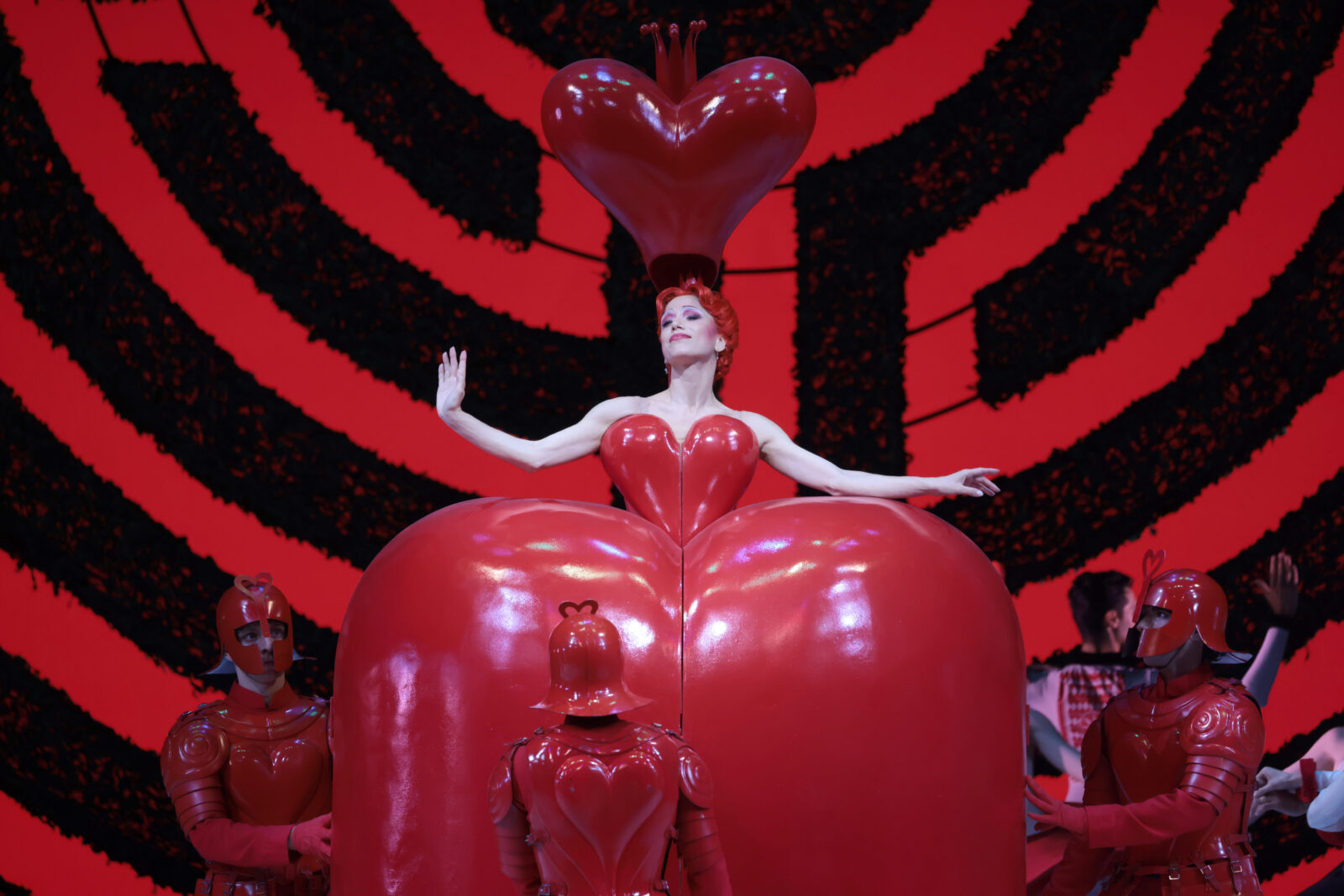
First soloist Alice Mariani delivers one of the evening’s most compelling characterisations as the Queen of Hearts, also implicitly echoing the maternal authority figure within the Alice narrative structure, emerging as a sharply realised centre of theatrical gravity and, arguably, its most assured comic triumph. Stepping into the role’s extravagant register, she calibrates authority and theatrical exaggeration with control, striking a precise balance between high-camp imperiousness and vanity. The pseudo–Rose Adagio sequence is rendered with a deliciously subversive edge, verging on the unhinged without ever compromising stylistic coherence; the result is a performance that provides one of the evening’s most theatrically incisive highlights while sustaining a credible dramatic presence within the ballet’s broader tonal ecosystem.
Soloist Christian Fagetti’s Mad Hatter (the theatrical illusionist figure of the piece), complete with his tap-dance sequence, remains one of the production’s most overtly theatrical insertions and continues to land as a welcome burst of stylistic diversion within the ballet’s broader architecture. While the moment has by now become familiar within the grammar of Christopher Wheeldon’s work, Fagetti sustains its rhythmic vitality and comic intent, even if the sharper edge of eccentricity that might push the character further into true theatrical delirium is only partially realised, and the sequence itself can feel unexpectedly fleeting on the expansive Milanese stage.
Less fully defined, by contrast, is corps dancer Gioacchino Starace’s dual embodiment of the Caterpillar/Rajah. Despite evident commitment, the performance tends to dissolve into the surrounding visual density of the production: the role glides through the action without leaving a lasting impression, its hypnotic potential somewhat diluted by the overwhelming richness of the stage picture.
A more immediate theatrical impact is achieved by corps dancer Andrea Crescenzi’s March Hare during the chaotic Mad Tea Party sequence. Injecting the scene with a sudden burst of vibrant precision and manic charm, he brings a compact but defined presence to the stage.
Taken as a whole, La Scala’s Alice confirms the durability of Wheeldon’s vision. If certain first-act illusions may now appear less astonishing than they once did, the work compensates through structural coherence and choreographic inventiveness. Most importantly, it resists the fate of becoming a purely decorative blockbuster. Instead, it continues to operate as a living theatrical organism, one that absorbs familiarity without losing its capacity for transformation.
What remains most striking, ultimately, is not novelty but endurance: the ability of Alice’s Adventures in Wonderland to inhabit the space between narrative clarity and perceptual instability, still offering – even after years of circulation – a theatre of controlled wonder, where meaning is constantly deferred but never entirely lost.